Shipwreck Psychogeographies: Mapping the Oceanic Unconscious (2026)
Performance Lecture
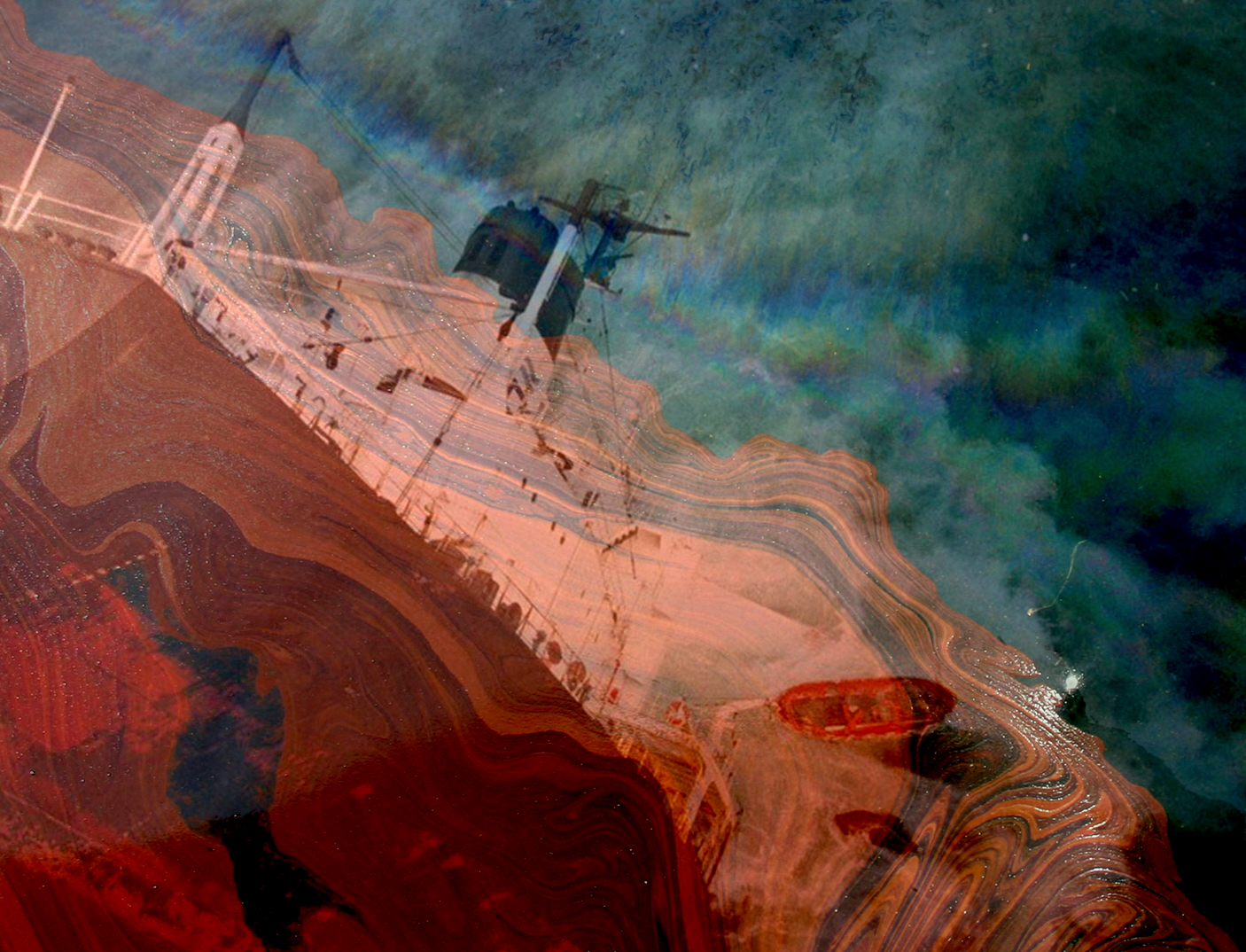
Maritime travel has been associated with exploration and resettlement, colonialism and trade, migration and exchange, through time. Ships carried people, goods, ideas, technologies, and militaries across continents, enabling both material circulation and hopeful journeys into the unknown. A glance at real-time ship-tracking maps reveals the dizzying, ceaseless flow of capital—and, as of recently, the consequences of its disruption through a weaponisation of geography.
Once vessels sink, they are removed from ship registries and effectively deleted from the present. Their ghostly remains, however, persist. Unlike monuments on land, shipwrecks disappear from public view. Subjected to the slow workings of undersea entropy and non-human life, these submerged anti-monuments commemorate human and ecological loss, as well as journeys that never reached their destination.
This lecture attempts to extend the Situationist concept of psychogeography beyond the city and into the maritime realm. It approaches the ocean as a cultural landscape, home to a collective unconscious: a dynamic archive where interrupted technological, colonial, economic, and migratory dreams accumulate in haunting material forms that mirror our societies. Through an associative drift from wreck to wreck across time and geography, it weaves a stream-of-consciousness narrative of maritime disaster and asks what these submerged ruins can teach us and what they can make us feel about the human condition, as well as its mishaps and failures that continue to shape our present.
Commissioned by MOMus- Thessaloniki Museum of Contemporary Art and the 9th Thessaloniki Biennale of Contemporary Art | Everything Must Change- Radical Intelligence, curated by Nadja Argyropoulou and presented at the closing programme of the Biennale.